Print        Send to Friend

Activities of the Professional Health Working Group on Recent Flood Of Iran

Activities of the Professional Health Working Group on Recent Flood Of Iran


Prof. Hamid Reza Khankeh, director of the department and head of the Health in Emergency and Disaster Research Center in the University of Social Welfare and Rehabilitation Sciences has been in the Operations Center (EOC) of the Ministry of Health and Medical Education, commits the commanding aftermath of flood events in Iran. He described the status of the work of the specialist health care workgroup in recent disasters.

Prof. Hamidreza Khankeh as deputy of the Emergency Department for Crisis Affairs said: "The Norooz holiday of the Emergency Department and the Ministry of Health's  Emergency Operations Center (EOC) is on standby from 16 March 2019. Several meteorological warnings have also been sent to various organizations as well as to us, followed by the Minister of Health, readiness for the health sector was issued. Of course, nobody predicted such a great flood, so we were prepared to be as planned like previous years. On 24 March, I notified that the extent of the incident is increasing, so I immediately returned to Tehran and referred to the Command and Control Center of the Ministry of Health. At the same time, the Tehran Disaster Mitigation and Management Organization received a warning message and immediately an emergency meeting was held representing all relevant organizations and the mayor of Tehran. There they discussed the possibility of a flood in Tehran. So, as the secretary of the health work team, I announced to stand up to all the medical universities in Tehran.

On 25th March, on the basis of the assessment, the level of the incident was announced nationally (E3) and we called the heads of all medical universities. Then, according to the decision of the EOC, the universities will hold working group meetings and send us their reports. We convened on the 26th March an urgent meeting with the working group. We continued to communicate with universities at a moment, and we received reports on a regular basis. The various units of the Ministry of Health were regularly present at the EOC. We have a direct relationship with the Tehran Disaster Mitigation and Management Organization and the affected universities. A rapid assessment was carried out and damages to health were estimated."

Prof. Hamid Reza Khankeh referred to international assistance and said, "We have a good relationship with the World Health Organization WHO, and we have been working very hard to get an aircraft carrying medical equipment. We held numerous meetings with international agencies and convinced them to support at least $ 1 million for health section."

Prof. Khankeh, who has served as the representative of the health team at all meetings of the governorate, the Interior Ministry, parliamentary commissions and the armed forces, said about the cooperation of other organizations. In all meetings, regular reports of the health system were provided and a good connection with the organization has been made. In addition to collaborations from various organizations, the Field Officers will also regularly review the needs of flood areas and report to the EOC. The healthcare team meetings receive and assess needs at a moment's notice. All the managers of the Ministry of Health come to the EOC every week, they present their needs at meetings, we analyze the needs, then we pass on the minister, to the deputies, and to international organizations, but these actions are not enough. For example, today, a report came to the sight that Lorestan did not have a good situation, which indicates that Lorestan did not properly assess its needs. I have repeatedly said, and again I repeat that it is necessary for our teams to go and in addition to the assessment that the relevant university does, we also have to make an assessment.

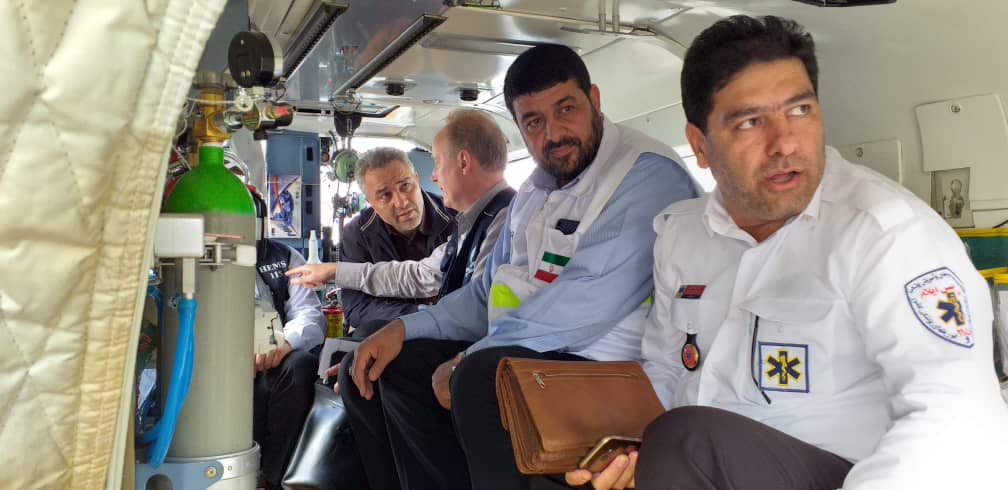
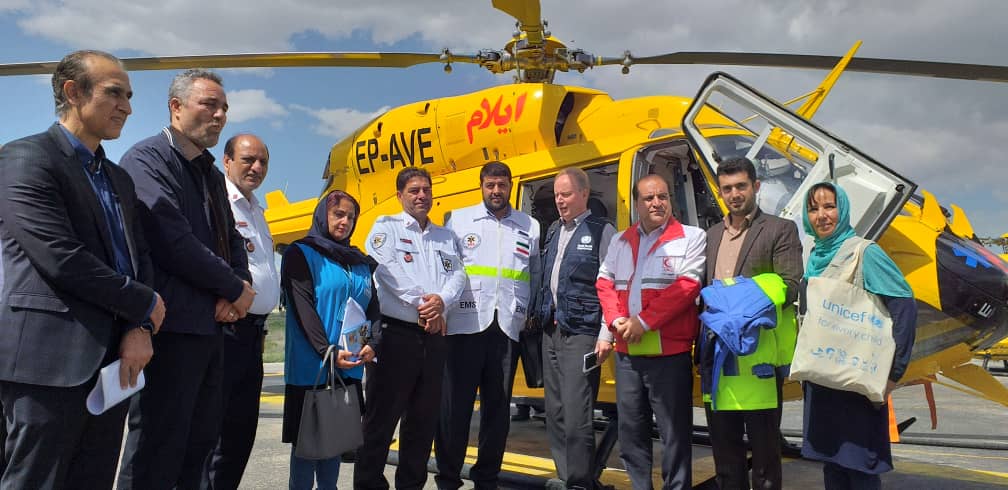
Prof. Khankeh added that we recently visited the Ilam province, which gives us a lot of information about the visit. The healthcare team's visit to the affected areas is good to continue. We just need to pay attention to the fact that visitors should not be excited to be executed and decide instead of people, but we should be with the provincial authorities and give them advice.

In response to the question of how he evaluated the work of the healthcare team, he said: "Overall assessment is that the health system is in a good condition. Our colleagues, such as Dr. Motlagh have done very well and they are in the field, our air rescue deployment has expanded, and our information and communication (Risk communication) have worked well, our pre-hospital and hospital systems are good. Health volunteers have worked very well. We do not need more human resources. Until now, there have been no reports of the spread of infectious diseases after the flood event; neither sporadic nor epidemic cases. Our care system is very good at serving. Both the Centers for the Control and Prevention of Infectious and Noncommunicable Diseases work well. People with chronic diseases are registered with the health ministry and are being screened according to their schedule and care.

Prof. Hamid Reza Khankeh said about the health sector problems: The problem that exists is that the nature of homelessness and displacement is such that many women's access to health is limited and, unfortunately, the basic needs of women are not seriously seen. Still, there are reports of the lack of availability of suitable clothing and women's health. In addition to reproductive health problems, NCDs may be in trouble, people with heart disease, chemotherapy, dialysis, may face challenges in getting services. Of course, we have not yet received reports of such problems, and we hope not to have such issues. On the other hand, when the weather becomes warm, we should be worried about infectious diseases, especially waterborne diseases. The deputy health minister must fully develop health care and the disease surveillance system pursues these seriously and uses very sensitive sensors. In addition, we need to consider the mental health of people.

Prof. Khankleh said one of his concerns was the nutrition of the people: "My personal concern is feeding these people because the central kitchens are still not fully functional and the hot foods that are distributed from different sources reach people and I am worried regarding the probability of contamination of food in such a situation. In Ahwaz, there are 16 sewage points. In some cases, water and sewage are mixed together. I have repeatedly advised the media that it is better for people in areas affected by floods to use water packaging. The food is distributed from the centralized crescent kitchens and can be used for canned food at places where there is no possibility of cooking.

His strong recommendation was to do not forget recent events over time. "Flood is not a transitory and short-lived event; we have to stay with the people for months," he said. We should not think it's over. In the earthquake of Kermanshah, the minister of the time made us close to the people of Kermanshah until 6-7 months later. It also seems to be happening in the flood and we will be in the vicinity of people affected by flooding for 6 months to a year. I will advise the Ministry of Health to divide these areas and assume responsibility for each region in a province. That is, the province undertakes to support the area in terms of specialized services and equipment, and the Ministry of Health will also bear the costs.


In response to the question of whether, despite the widespread of medical universities throughout the country, flood areas can not afford to take care of health care and health services alone, Prof. Khankeh answered that they can be needed at the national level of these areas In the end, the forces of the affected areas are tired of the crisis, perhaps they do not feel themselves, but such conditions require that their EOC assessment is based on their needs. In areas affected by the flood, the family of health workers is also in a special situation and the person serving is also a person affected by the flood and we should not forget that they may also have lost their relatives, their property, and the total concern of these people may be a barrier to service. Eventually, these people work hard. Therefore, it is necessary to force new forces along with these people and send them forcibly leave to be rehab.

Prof. Khankeh said about the current position of the Ministry of Health's Emergency Operations Center: In the Kermanshah earthquake, for the first time, the EOC was centered, but in the recent flood the focus was reached and at the moment the Ministry of Health is visiting the EOC and sharing information there. Right now, the EOC has evolved in this direction. One of my personal wishes was to have unity of coordination, unity of information and unity of command in disaster events. This is happening. Dr. Kolivand head of Emergency of Iran also believed in the EOC. Directions that were previously discarded are searched and used. All instructions were previously neglected by the universities, but today it is not, and this is a blessing. Iran's National Response Framework NRF can be an international pattern and we see that this document is being requested by various organizations. I'm not saying that these instructions are flawless, but they are largely up-to-date and can definitely become more complete. For example, in the recent incident, attempts were made to enforce the level, which prevents excitement and chaos.

He added: "We have little experience with the flood, and research centers and academic communities need to address this issue and enter it." Developing protocols, compiling textbooks, flood risk assessment, training people, training authorities, training specialists, etc. are issues that should be addressed in relation to floods. Even our health forces do not know how to deal with floods. Therefore, we must think of a more serious flood; especially since with these climate changes, we will probably experience periods of floods and droughts in a few years. As studies have shown, even in droughts, due to sudden water flooding, we can experience about fifty percent of the flood, so we need to think more about flood compatibility.

He concluded: "It is hoped that partnerships will come from all sectors and organizations to repair damages sooner." The flood will end in April 2019, and the government should try to build homes, provide basic needs and equipment, and bring people back to their lives.


14:42 - 2019/04/24    /    number : 14147    /    Show Count : 3564


Close